· Jason Louro
How Chunkyard uses AI, and what it doesn't do
A plain account of where Chunkyard uses AI, where it doesn't, how you stay in control, and what that means for the games you make.
Yes, Chunkyard uses AI. It generates pixel art, music and game content while you work, and only when you ask for it. No drawing or music goes into your game until you've approved it, and you can change any creature, item, rule or map afterward.
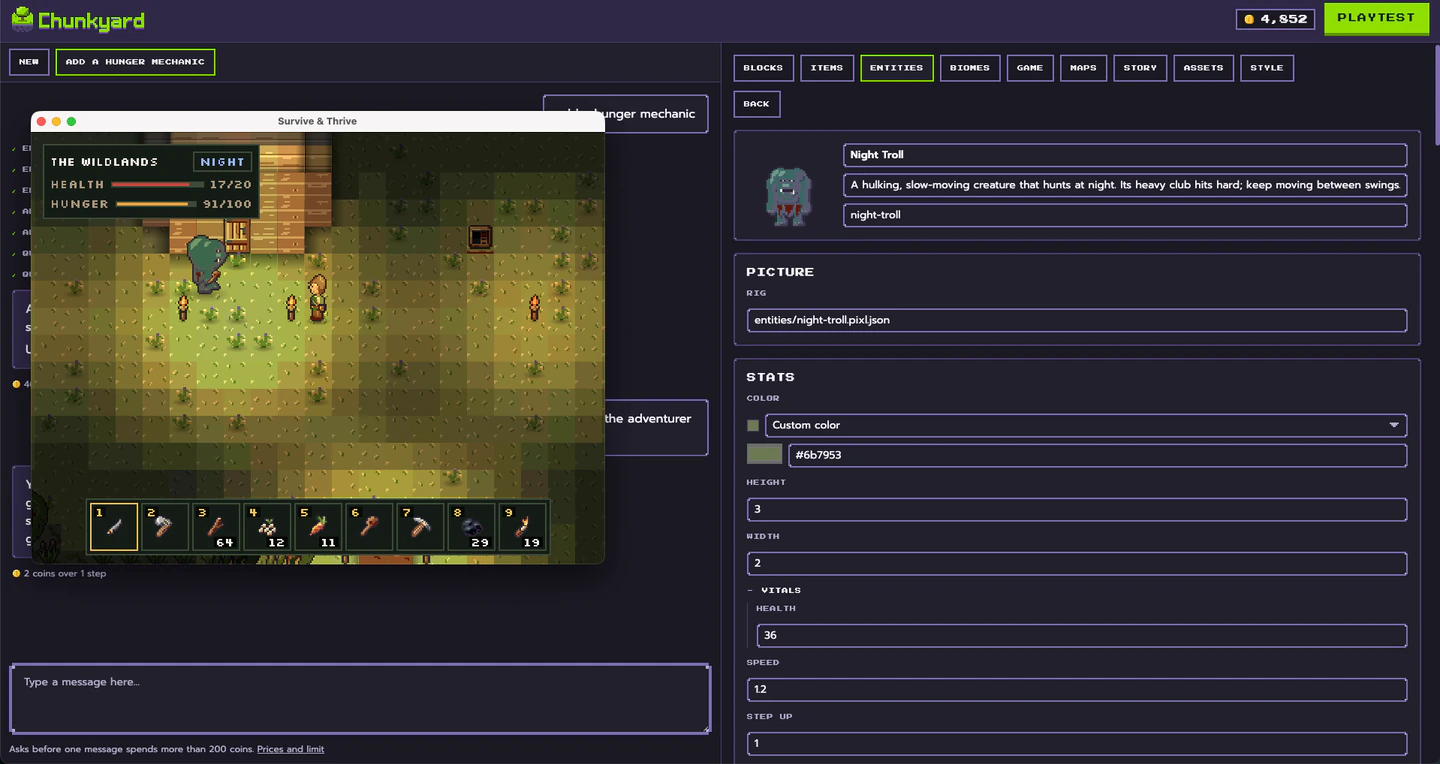
I know a lot of players are skeptical of AI in games, and I understand why. So here's exactly what it does.
Where Chunkyard uses AI
| Part of your game | What AI does | What you do |
|---|---|---|
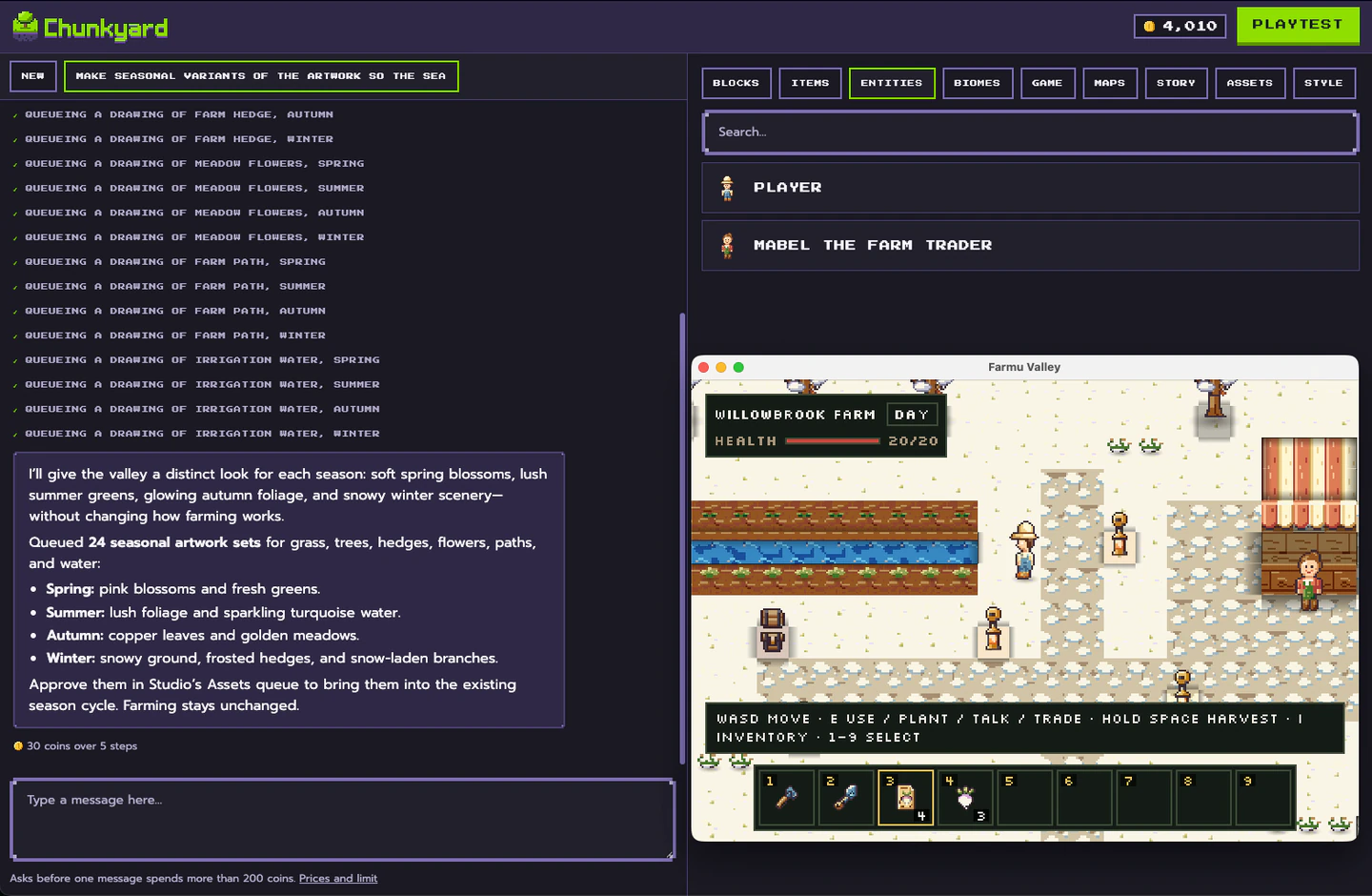
| Pixel art | Writes a spec for each sprite, which Chunkyard's code renders and checks | Approve it, or redraw it with or without notes |
| Creatures, items, recipes, rules | Turns plain-English requests into game content | Review it, playtest it, tune its numbers in the forms |
| Music | Makes looping ambient instrumental tracks for your game | Listen, approve it, or compose it again |
| Chat | Answers questions and makes changes you ask for | Decide what to keep |
Where it doesn't
- The game engine. Movement, collision, day and night, farming, crafting, combat and saves are regular code. AI doesn't run your game.
- Sound effects. New games start with a library of about 200 sound effects from CC0 packs on OpenGameArt, recorded or made by people. Exported games credit the packs they use.
- The rules of pixel art. Palettes, outlines, seamless tiles and animation are handled by code, so they don't drift. The pixel art engine post explains how.
- Editing, playtesting and exporting. Changing a number in a form, playing your game and exporting it don't call a model, and they cost nothing.
- Your exported game. An exported game plays the files you approved. It runs on its own, offline, with no account, and never calls an AI model.
Why Chunkyard doesn't do "type an idea, get a whole game"
Tools that make a whole game from one sentence take the decisions away from you, and the decisions are the fun part. In Chunkyard you build piece by piece. Ask for something, check it, try it, keep going. That's slower than one prompt, but it ends with a game you made.
Where generation runs
Generation runs on Chunkyard's backend, not on your machine, so the chat, drawings and music need an internet connection. The chat and the pixel art engine refuse requests for illegal content, and music is always instrumental. Steam requires this for any app that generates AI content while it runs.
Steam's AI disclosure
Steam asks developers to disclose AI-generated content on their store pages. Chunkyard's page says that it generates content while you use it, always at your request, and describes how output is checked.
If you publish a game you made with Chunkyard, your game's art and music were made with AI tools, so you'd disclose that on your own store page too. This post covers selling a Chunkyard game on Steam.
What it costs
The chat, drawings, style kits and music use coins, and every paid action shows its price before it runs. Drawings and music tracks have fixed prices. Chat is billed by how much the model actually reads and writes. Each new account starts with 5,000 coins, and failed requests are always refunded.
Re-rendering saved art, recoloring it, changing a creature's motion settings, editing, playtesting and exporting are all free.
Questions?
If something here isn't clear, or you'd like to know more about how a part works, email me at [email protected]. I'd rather answer hard questions than have people guess.